
Restworks’ Power Nap Guide
A power nap is a brief period of rest during the day to gain better focus and mental alertness. Several scientific studies verify the benefits of napping, which is why Restworks is dedicated to integrating naps into work life. Here is our guide to the perfect power nap.
What is a power nap?
A power nap is a term that first appeared in the 1998 book titled “Power Sleep” by Dr. James B. Maas. It denotes a short rest that consists only of phase 2 of non-REM sleep, the first phase where we are unaware of our surroundings. During this phase, your heart rate and breathing slow down, and your body temperature drops. After waking up from such a nap, you should feel rested and refreshed.
In many ways, power napping can be seen as a scientific development of the siesta – the traditional period of rest during the day which was found in many cultures across the world. By nature, humans are biphasic sleepers. This means our bodies – and our minds – are meant to sleep in two segments each day. Power napping helps integrate our natural sleep pattern into modern life.

How to power nap
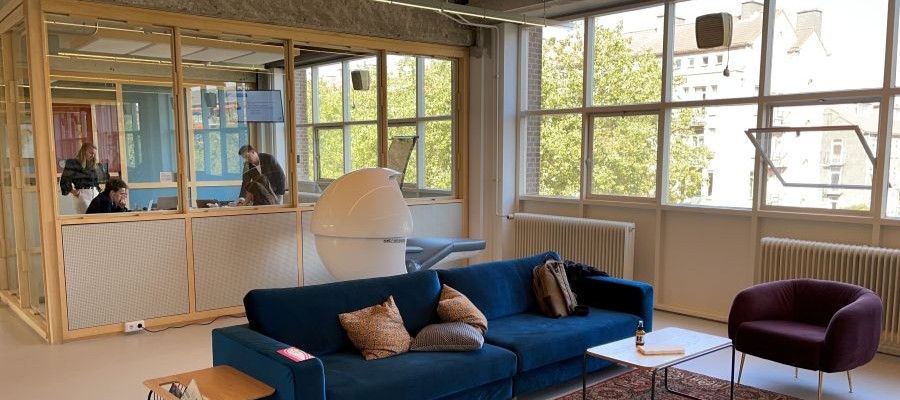
- Take care of your environment. If you can, make sure the place you sleep in stays well ventilated, relatively quiet, and dark. A nap pod is an excellent option.
- If possible, elevate your legs. Doing so relieves pressure from our lower back and body and helps to relax the body.
- Set an alarm clock. Your power nap should be 20 to 30 minutes maximum to avoid sleep inertia.

Tips and tricks
- Try having a coffee before your nap. If you go to nap directly after a cup of coffee, the freshly assimilated caffeine won’t affect your ability to fall asleep, but will make you feel even more rested when you wake up. This strategy is also known as a coffee nap.
- Give up power napping after 5:00 PM. Taking a late nap can disrupt your sleep patterns and make it harder for you to fall asleep at night.
- Don’t feel guilty. A nap is not a sign of procrastination! Think of it as a tool to improve your productivity (because it is).
How long is a power nap?
In a society where everyone has a busy schedule, you may think that you can’t find the time to sleep during the day, but a power nap aims at reaching phase 2 of non-REM sleep, which means that it should last long enough to get out of phase 1, but should be short enough not to go into phase 3 which is deep sleep.
How long it takes you to get into each sleep phase is an individual matter, but scientists assume that the optimal power nap length is between 20 and 30 minutes, and some studies suggest that as little as 6 minutes of sleep could have a desirable effect. In other words, there’s always time for a power nap.
READ ALSO: BEST LENGTH OF TIME FOR A POWER NAP

What are the benefits of power naps?
Performance: For nearly 30 years now, scientists have agreed that an afternoon nap can boost our creativity, awareness, and performance from 30 up to 60 percent compared to the state we were in before the rest.
Physical health: The most common cause of death in developed countries is cardiovascular disorders. According to a study conducted by the University of Athens, taking afternoon naps at least three times a week can reduce the risk of heart disease by almost 40 percent.
Mood: Research from the University of Michigan confirms that people who use power naps have a better mood overall. Knowing how important mental health is (especially during a pandemic), we should consider power naps a vital weapon in the fight against daily stress.
Memory and learning: According to Dr. Matthew Walker, naps can significantly improve our ability to learn and store information. Consider including a short rest when planning your next study session.
Weight loss: Studies have shown a clear link between sleep deprivation and obesity. When sleep deprived, our body produces more insulin, making us crave energy-rich food. In this manner, getting the nighttime sleep you need can help you lose extra weight.
Increase alertness: A study done on military pilots and astronauts at NASA showed a 34% performance improvement after a 40-minute nap.
Reduce accidents: Nighttime shift workers who took a nap reduced nighttime accidents by 48%.

When should I take a power nap?
Early afternoon is an ideal time to take a nap. For many people, between 2pm – 4 pm is the best nap window since you have probably already eaten lunch and your body naturally experiences a dip in energy.
Another way to calculate your optimal nap time is to use your wake time and add 7 hours. For example, if you wake at 7am, your optimal nap time would be 2pm.
If you have difficulty falling asleep at night, taking daytime naps after 3 pm may interfere with your nighttime sleep. An easy rule of thumb is to wake from your nap no less than 3 hours before your bedtime.
Of course, everyone operates on a unique schedule, and you may need to try napping at different times to find what works best for you.

Sure, I’d love too, but I just don’t have the time to nap
The human body is designed to sleep twice in a 24-hour period thanks to a natural, internal process called a circadian rhythm that regulates our sleep and wake cycles.
Many cultures around the world embrace a daytime rest (siestas) while others unfortunately put a negative stigma on napping. So while you may think you aren’t capable of napping, there are likely social or mental reasons preventing you from napping, not physiological ones.
There may be many external reasons that cause you to believe that you cannot nap – your work place may not support a midday rest or you may think taking a nap will reflect negatively on you or your work. You may have tried to nap in the past and felt more tired upon waking or you feel crunched for time and think it’s easier to reach for that extra cup of coffee instead of a nap.
If you can find a quiet space to take a 20-minute power nap, allow yourself to let go and reset. Your mental and physical health, not to mention your work performance, will prove that it is worth it.

Power naps in a blink
Power naps are a scientifically verified way of becoming healthier and more productive. Instead of reaching for a candy bar at 2:00 pm, why not just grab a pillow and disappear from the world for 20 minutes to come back 30 to 60 percent better? – It’s time to take back the power of rest!